

Jonathan Reed never thought of himself as someone who spied on others. In his mind, he was simply a man who had learned how to survive. There was a difference—at least that’s what he told himself while signing contracts for twenty-six security cameras and watching technicians snake wires through the walls of his house like veins beneath skin. He wasn’t interested in invading anyone’s privacy or feeding some wealthy man’s paranoia. He was a widowed father raising twin boys, shaped by years of being the one left behind to clean up what others abandoned. Jonathan was forty-four when his wife died, a sentence that still felt unreal every time it crossed his mind. Not because the number itself was young, but because Laura Reed was never supposed to be gone. Laura had been a pediatric neurologist in San Diego, the kind of doctor who could calm a crying child just by kneeling down and meeting their eyes. She had fought for motherhood for years—enduring two miscarriages that quietly hollowed out their home—until, against all odds, she carried a pregnancy to term. Twin boys. Ethan and Lucas. Jonathan still remembered standing in scrubs under blinding surgical lights, bargaining silently with the ticking clock during the emergency C-section. The boys arrived small but alive, crying with fierce determination. Laura held them for barely a moment, smiling at Jonathan with exhausted triumph and whispering, “We did it.” Four days after they returned home, she collapsed from internal bleeding that should have been caught. She died before help arrived, leaving Jonathan alone in a hallway with two newborns and a silence that felt predatory. From that moment on, grief became something the world expected him to manage efficiently. Nurses came and went, always leaving with the same careful explanation: the babies needed more than they could provide. One twin cried constantly, but Ethan’s cries were different—sharper, relentless, paired with stiffness and movements that felt wrong. Jonathan mentioned it at appointments, but Dr. Matthew Collins, the obstetrician who delivered the boys, dismissed his concerns with practiced confidence. “Normal,” he said. “Newborn nervous systems. It will pass.” Then Laura’s sister arrived. Karen Doyle came armed with lawyers and accusations, filing for emergency custody and painting Jonathan as an absent, overwhelmed father. She advised him to install cameras to “prove” he was monitoring everything. He hated the implication but feared losing his sons more. That was how Nina Brooks entered their lives. Twenty-nine, studying for her nursing license, quiet but steady. She didn’t gawk at Jonathan’s wealth or pretend to be impressed. She asked practical questions, learned the boys’ routines, and when Ethan cried—as he always did—she didn’t panic. She handled him with a gentleness that felt trained by loss. Karen disliked her instantly, planting seeds of doubt Jonathan tried to ignore. He told himself the cameras were for legal protection, but weeks passed without him checking them. Work consumed him, grief hollowed him out, and he trusted that things were… fine. One sleepless night, he finally opened the footage. What he saw shattered every assumption. Nina wasn’t careless—she was methodical. She performed precise physical exercises with Ethan, stretching and rotating his limbs with clinical focus, referencing notes she carried with her. He watched her cry silently while preparing bottles, composing herself before returning to the boys. He saw therapy equipment purchased with her own money, hours of unpaid work, and meticulous documentation. Then came the bath-time clip: Nina discovering a mark on Ethan’s scalp, photographing it instinctively, then deleting the evidence when she heard Jonathan’s car. Dr. Collins had said everything was fine—but it wasn’t. As Jonathan watched deeper into the night, the truth unfolded. Nina researched birth trauma and cerebral palsy. She tried to speak up during checkups and was shut down. He saw fear flash across the doctor’s face before dismissal hardened it again. Then he found the clip that broke him: Nina drafting and deleting an email reporting medical malpractice, over and over, before whispering an apology to someone named Mateo—a brother she couldn’t save. A boy in a wheelchair. A past she was trying to outrun by saving Jonathan’s sons. When Jonathan confronted her, the truth came out in fragments. Nina’s visa had expired. She was undocumented, terrified that speaking openly would get her deported. She had recognized Ethan’s symptoms because she had lived them before. She planned to report everything anonymously before being forced to leave. Instead of anger, Jonathan felt shame. He had installed cameras to catch her failing, only to discover she had been carrying the entire weight alone. That morning, Jonathan made calls—not to authorities, but to lawyers and specialists. He sponsored her visa, fired the doctor, ordered an independent evaluation, and shut down Karen’s custody case. A new pediatric neurologist confirmed mild cerebral palsy caused by birth trauma—something that could have become irreversible without early intervention. Nina’s work had saved Ethan’s future. Months later, the house felt different. Lighter. Jonathan came home earlier. He learned the exercises. He learned how to listen. Ethan improved, slowly but surely, and Nina no longer lived in fear. Jonathan realized then that the cameras hadn’t exposed a threat—they had revealed devotion. And for the first time since Laura’s death, he understood that survival wasn’t about control. It was about choosing to stay, even when it hurt.
After our family reunion, I sat in my childhood bedroom scrolling through photos while the house hummed with leftover laughter downstairs. The smell of grilled burgers still clung to my hair. I opened my banking app out of habit, already planning how much of my savings I could move into the “future house” fund tonight.
The number made no sense.
Where there should have been eighty-three thousand dollars, there was a balance that might cover takeout and gas. For a second I thought it was a glitch. I refreshed. Same number. My stomach dropped so fast I had to sit down.
“Mom?” I called, but my voice came out thin. I grabbed my laptop from my bag, fingers shaking as I logged into the full site, clicking through recent transactions. One transfer. All of it. To an account in my father’s name.
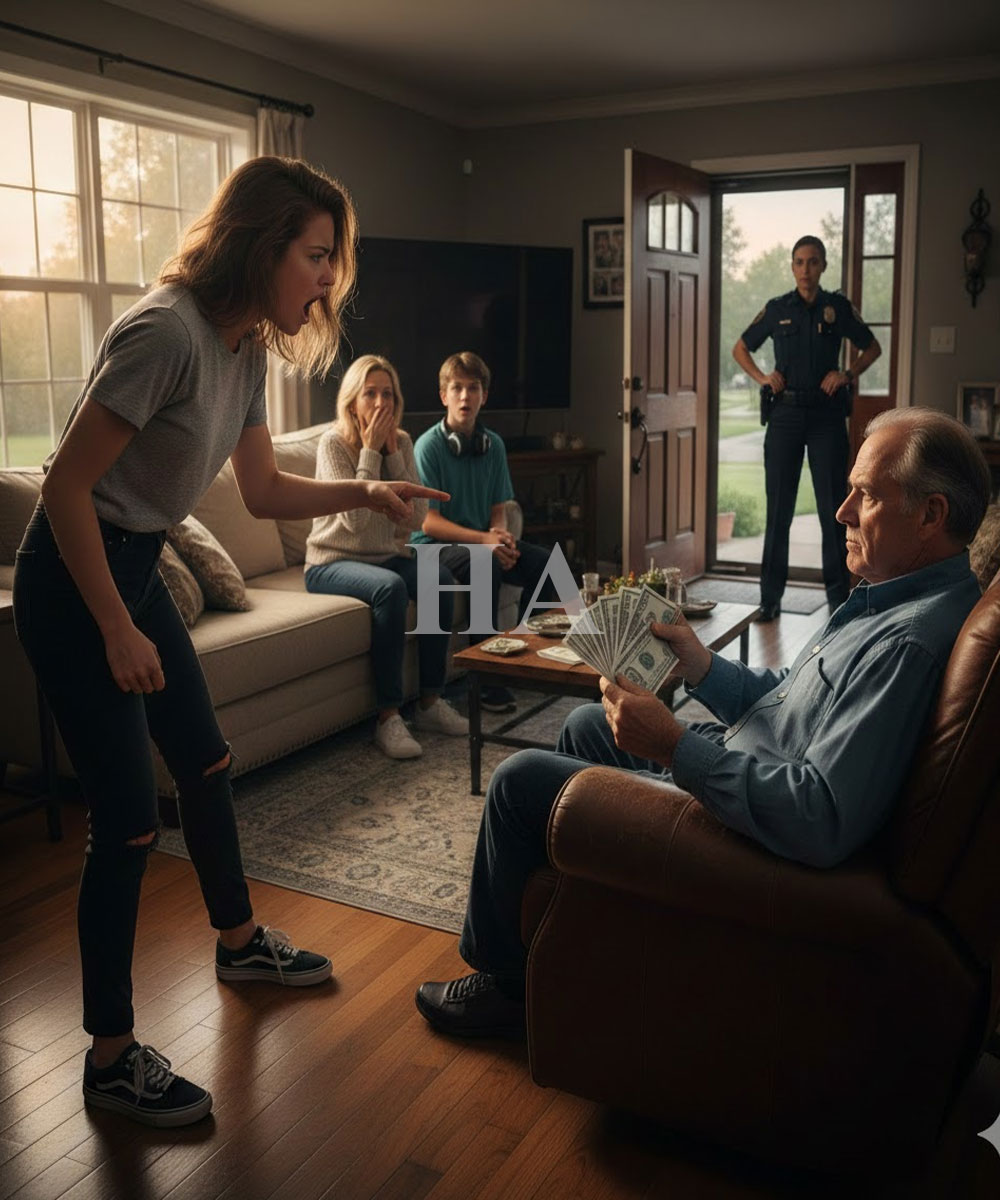
I walked downstairs on legs that did not feel attached to my body. Dad was in the living room with my mom, my younger brother Nate, and an uncle still nursing a beer. The TV blasted some game show, everyone loose and happy from barbecue and cheap wine.
“Dad,” I said, standing between him and the television. “Why is my savings account empty?”
He didn’t even mute the TV. “Because we needed it more,” he snorted. “Mortgage, medical bills, that leaky roof you keep complaining about every time you visit. You’re single, no kids. You’ll make it back.”
My cheeks burned. “That’s my money,” I said. “Every extra shift, every freelance project, every vacation I didn’t take. You had no right.”
Mom fluttered her hands. “Emily, calm down. It’s all in the family. Your father has always managed the accounts. You know that.”
“That was when I was sixteen,” I shot back. “I’m twenty-seven. I left his name on that account because I trusted you.”
Nate laughed from the couch. “Wow, Emmy, chill. You act like he robbed a stranger.”
My vision blurred. For a heartbeat I considered just walking out and never coming back. Instead, I reached for my tote bag on the side table. The leather felt cool and steady under my hand, an anchor.
I looked my father in the eye. My voice came out low but clear. “Then you won’t mind what’s coming next.”
They all chuckled, like I’d told some dramatic joke. In the middle of their laughter, a loud bang shook the front of the house, rattling the picture frames.
The door flew open—and two uniformed officers stepped into the living room, followed by a woman in a navy blazer, a folder tucked beneath her arm.
The woman in the blazer was Attorney Rachel Moore, and she looked nothing like the nervous associate I had met three weeks earlier. In my parents’ doorway she moved with practiced confidence, flashing her bar card and greeting my father like they were at a business meeting instead of an ambush.
“Robert Carter?” one of the officers asked.
Dad finally muted the TV. “Yeah,” he said slowly, eyes flicking from the uniforms to me. “What’s this about?”
“This is about the unauthorized transfer of funds from your daughter’s accounts,” Rachel replied, holding up a folder. “And several loans opened using her Social Security number. We’re here with a warrant to review financial records and devices related to that activity.”
The color drained from my mother’s face. “There must be some mistake,” she whispered.
I wished there were.
Three weeks earlier I had noticed a random overdraft fee and stopped by my credit union on my lunch break. The teller pulled up my profile, frowned, and asked if I had recently increased the limit on my home-equity line of credit.
“I don’t own a home,” I’d said.
That sentence knocked over the first domino. The branch manager joined us, then a fraud specialist. I learned that the “custodial” savings account my parents opened when I was a teenager had never been fully converted into my sole ownership. My dad’s name still sat next to mine.
His name made everything possible: small transfers, a personal loan with my name as co-signer, their refinance using my credit score. All of it carried my signature in smooth loops I’d never written.
I left the bank with a folder of statements and a referral to Rachel, a financial-crimes attorney. She had taken one look and said, “You need to file a police report today. If you confront them first, the evidence could disappear.”
So I filed. Detective Alvarez from the economic crimes unit walked me through my options: a repayment agreement with everything documented, or a formal investigation. We started with a letter, giving my parents ten days to respond.
They didn’t. Instead, Mom texted me a photo of a new patio set, thanking God “things were finally looking up.”
Now Alvarez’s warrant was being read in my parents’ living room.
“This is ridiculous,” Dad barked, pushing himself to his feet. “Emily, tell them to leave. You’re my daughter. Families don’t call the cops over money.”
“Families don’t steal their kids’ futures,” Rachel said evenly. “You were notified and chose not to respond.”
Nate gaped from the couch, his beer dangling. “Emmy, you really did this? To Dad?”
I swallowed. “He did this to me.”
Dad’s gaze hardened. “I paid for your braces, your car, those college applications. And this is how you thank me?”
“You paid with my credit, apparently,” I said.
The room went very still. Mom clutched the edge of the coffee table. “Robert, please,” she whispered. “Just cooperate.”
“Sir,” the closer officer said, “refusing to comply with a lawful warrant can lead to additional charges. We’re asking for your cooperation.”
For a long moment I thought Dad might actually fight them. Then he looked at me, and the betrayal in his eyes felt like a shove.
“This is what you wanted?” he asked. “To see your own father treated like a criminal?”
I met his stare. “I wanted you not to act like one.”
His jaw clenched. Without another word, he stepped aside and let them in.
Four months later I stood in the hallway of the county courthouse, holding a styrofoam cup of burnt coffee and staring at the plea agreement.
“Last chance to back out,” Rachel said. “Not that I recommend it.”
The document spelled it out: my father admitted taking the money and opening loans without my consent. In exchange for pleading guilty, he would repay what he could, attend financial-management classes, and serve probation. If he violated any term, the suspended jail time became real.
It wasn’t dramatic movie justice, but it cleared my name and cleaned my credit. That mattered more than seeing him behind bars.
“I’m not backing out,” I said.
I had seen Dad once since the search. He’d asked to meet at a diner. I went, against Rachel’s advice, because thirty years of being his daughter does not shut off overnight.
He hadn’t apologized. He’d talked about medical bills, the mortgage, layoffs at the plant, how he had “always taken care of the money” and “meant” to pay it back.
“You’re a software engineer,” he’d said. “You’ll be fine. Your old man needed a little help.”
“You took eighty-three thousand dollars and signed my name,” I’d replied.
His jaw had tightened. “After everything I did for you, this is what you focus on.”
I had walked out before the waitress brought our food.
The hearing itself lasted less than twenty minutes. The judge asked my father if he understood the deal; he answered yes without looking at me. When it was my turn, I read a brief statement about nights spent on hold with banks and how trust, once broken, doesn’t grow back like money in an account.
“I’m not here for revenge,” I finished. “I’m here because I want my future to belong to me.”
The judge accepted the plea. Papers were signed; dates were set; the gavel came down. When Dad finally glanced over his shoulder, I kept my eyes on the bench. The bailiff led him out a side door.
Life after that was paperwork and small, stubborn steps. I froze my credit, changed every password, and moved into a one-bedroom apartment in Columbus that echoed when I walked. For the first time, every bill, lease, and account carried only my name.
I found a therapist who specialized in financial abuse. Tuesday evenings I talked about how “helping family” had turned into erasing myself. My mother still called, first to beg me to drop the case, later to offer updates about Dad and the neighbors. I learned to say, “I’m not discussing money,” and hang up when she pushed.
Almost a year after the reunion, I hosted friends from work for takeout and cupcakes. We toasted with cheap champagne to my student loans being gone and my savings finally climbing again. When my phone buzzed with a bank alert, my stomach clenched on instinct.
It was a deposit: the latest restitution payment, right on schedule. Not enough to undo the damage, but proof that the consequences were real.
“You okay?” my friend Maya asked.
“Yeah,” I said, feeling it settle in my chest. “I think I am.”
Down the hallway, a neighbor’s door slammed, the sound cracking through the apartment. This time I didn’t flinch.
The first loud bang—the night the front door flew open and the officers stepped into my parents’ living room—had blown apart the version of family I was raised to protect at all costs. This quieter echo marked something else: the life I was building on my own terms, boundaries clear, future finally mine.



